
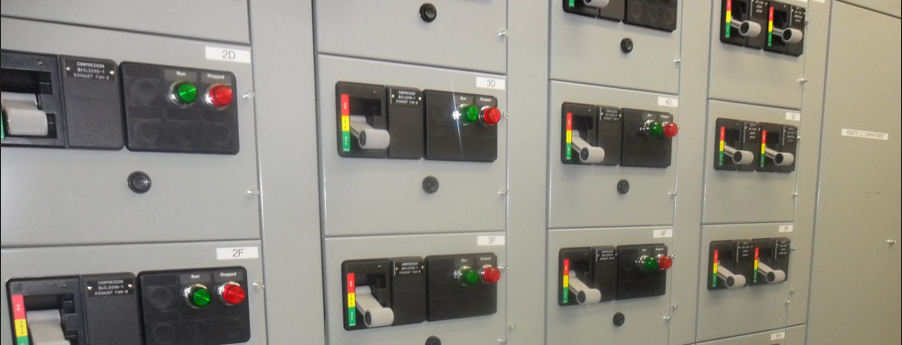
Science Class: Electrical Insulators.

Do you recall being in a science class and learning about electricity?

Battery

Just the thought of electricity made many nervous, while others were intrigued. The teacher then brought out wires, batteries, light bulbs, and wire cutters. This lesson taught us about electrical currents, which was demonstrated by connecting the now stripped wires to the batteries, in a circle, and then adding in the light bulb into the circuit.

lightbulbOn


What happened next? The light bulb became lit, and excitement filled the classroom of elementary school students.

Now did you ever wonder why you were not shocked by touching the “exposed” wires?

Well, for one thing, the battery that was used was not powerful enough to “shock” anyone.  In fact, the way wires were created is the fundamental reason to how we can safely avoid being electrocuted. In a sense, the rubber or plastic material used to coat the copper wires are used for electrical insulation. This ensures that the current will not escape into another conductor, like metals or even your body.

Electrical insulators are materials that are poor conductors for electricity, making them high in resistivity. This means that electrical charges do not flow free or at all.  Some good materials that are good examples of electrical insulators are paper and glass. As mentioned above, rubber and plastic are materials that are used quite frequently as insulators even though they have low moderate resistivity, because they are still able to provide safe insulation for hundreds to even thousands of volts.

Knowing what materials are good electrical insulators is just as important as knowing what materials are conductors of electricity.

Electricity is very interesting, but knowing how to stay safe around it is even more important. Having knowledge is crucial, but having friends in the business is one less thing to worry about. If you are not too sure about any electrical repair, A & H Electric is just one call away.

logo.png


Circuit Breaker: What Is Its Purpose?

circuit breakerWhen the power suddenly goes out in the house, most people immediately check the circuit breaker. This is a step in the right direction, as all the electricity in the building must go through the circuit breaker, where it is determined if there is a problem in the current, such as being the electric current being too high. But how many people really know what the purpose of a circuit breaker is? A circuit breaker is a device that will automatically stop the flow of a current in an electric circuit to protect an electrical circuit from damages caused by an overload or a short circuit. This ensures that if there is a problem, the circuit breaker will then “trip”, cut the power, and will not allow electricity where the problem is occurring until the problem is fixed.

photoSometimes, the problem is as easy as resetting the circuit breaker, but it is very important to find out what device/appliance that initially caused the “trip”. This is important, because if the problem starter is not found, whenever the appliance is used again, it will only cause the circuit breaker to cut the power again.  Even worse, it can result in a fire; therefore, it is important to talk with a Professional Electrician, if you are not knowledgeable on circuit breakers. Resetting a the circuit breaker can be done by turning the switches that are on “off”, back to “on” or by turning off all the electrical switches to off and then switching them back to on.

Other times, the fuse within the circuit box has burned out. Fuses are designed to burnthrough a thin metal strip if the current passing through the fuse exceeds its limit. Once the fuse is removed, it is always recommended to buy the exact type of fuse that was originally installed. Again, if you are not knowledge or do not feel comfortable with the circuit breaker, as electricity can be very dangerous, give A & H Electric a call.

Now we know that the circuit breaker is a crucial device in regulating the electric circuit within a building. If there is a faulty appliance, high electric currents, or exposed wires, the circuit breaker will trip, causing the closed circuit to open in the general area of where the problem resides, and how to fix the problem.

ahelectric


How To Save Money On Your Electric Bill: Home Installations

Go Green And Save Money - Houston TexasDuring the spring and summer your electric bill can go through the roof due to cooling costs.  We have come up with some helpful installations that will help you keep your electric bill down so that you can keep your home nice and cool.

  • Fluorescent lights provide more light with less energy than incandescent bulbs.  They also produce less heat.
  • Dimmer switches will let you adjust the amount of power that you are using to light your home.  Keeping these dimmers at a lower level will help reduce your energy usage.
  • Pilot lights for switches can warn you if there has been a forgotten light or appliance.
  • A timer for your air conditioner can turn off your AC when you leave your home and turn it back on before you get back.

If your interested in more money saving tips make sure to check out our article on habit changes you can make.

How To Save Money On Your Electric Bill: Habit Changing

How To Save Money On Your Electric Bill - Houston, TexasDuring the spring and summer your electric bill can go through the roof due to cooling costs. We have come up with some helpful hints on habits you can change to keep your electric bill down so that you can keep your home nice and cool.

  • Use a single higher wattage bulb instead of several bulbs with lower wattage. A 100-watt bulb produces more light then two 60-watt bulbs and consumes 20% less energy.
  • Make sure to only use long-lasting bulbs when the advantage to an extended life outweighs them putting out less light per watt then standard bulbs. For example, If you need three to get the lighting level you desire it’s not worth it.
  • Buy lampshades that have a wide opening on the top and the bottom since this helps spread light in the room.
  • Turn off incandescent lights when you aren’t using them. Turning lights on and off will shorten the life of the bulb but turning them on and off in themselves does not consume any power. Fluorescent lights on the other hand are better to be left on if you are only turning it off for a short amount of time.
  • Make sure that before you buy an appliance to check the yearly wattage usage and shop around for the energy efficient ones.

Bulb Education: What Is A Tubular Fluorescent Light?

Tubular Fluorescent Light - Houston, TexasUnlike Incandescent lights, tubular fluorescent lights are one of the most efficient type of lighting you can have, averaging up to 20,000 hours of lighting. Most commonly found in commercial buildings tubular fluorescent lights have made leaps and bounds in their design.  There are now small diameter lamps like the T-10 and T-8 that are super-efficient.

Unlike incandescent lights, tubular fluorescent lights efficiency doesn’t depend strictly on the bulb but the lamp and ballast system you have it in. There are both magnetic and the more modern electronic ballasts but with either type they are required to meet a governmental standard of efficiency.

If you are thinking about getting this type of lighting in your home make sure to hire a certified electrician to do the installation since any electrical work can be very dangerous if not done correctly.

Bulb Education: What Is An Incandescent Light?

Different types of Lightbubls

Incandescent lights are one of the least efficient light bulbs but at the same time the most  common. They are popular because they produce a mellow light that is very similar to  natural sunlight and they also are the most inexpensive bulbs to buy. However, incandescent lights usually range from 1000 to 2000 hours of use in a standard home.  Not only do they have a short life span, they only convert 15% of the energy they use into actual light.  The rest is converted into heat making them one of the most expensive types of bulbs to use for lighting.  If you don’t want to use other bulbs like Tungsten-halogen, Compact Fluorescent Lamps, Tubular fluorescent fixtures or High-intensity discharge (HID), you might want to try using Reduced-wattage incandescents which produce the same amount of light output but use less energy than the standard incandescent.

For more information on how to get your home running at peak energy efficiency, visit A&H Electric or give us a call at (936) 756-0442.

How Can I Protect My Home From Electrical Surges?

Outlet Surge Protector

image via popmonkeys

Electrical surges can happen in your home for many reasons.  They can result from electric motors switching on and off, static electricity, lightning strikes or the electric company switching from one utility to another; these surges can damage your more sensitive systems due to the sudden changes in voltage. Some signs you might have had a power surge in your home are:

  • Your microwave lost its preset timings.
  • Your computer has faulty output, data loss, or total circuit failure.
  • Any audio/visual equipment’s transistors have been damaged.

If you think this might be the case you might want to invest in surge protectors.  An electrical surge protector is a receptacle that you use to sense high voltage surges and absorb them, protecting anything that is plugged into it.  Surge protectors can come in the form of multi-outlet strips, plug-in adapters, and permanent receptacles. If you aren’t sure what your electrical problem is, feel free to give us a call at (936) 756-0442 or visit A&H Electric today!